

its been a while! how have u been?
Search here!

Custom Search
Monday, June 15, 2020
I’m Back!
Its 2020! Ang bilis ng panahon.. kapag binibisita ko itong blog ko bumabalik lahat ng memories ko noon.. napaka nostalgic.. 


Wednesday, March 13, 2013

Wednesday, February 27, 2013

Wednesday, December 12, 2012

Tuesday, July 31, 2012
Confessions of a Dragon Scribe: Cherishing the Most Enduring Friendships
Confessions of a Dragon Scribe: Cherishing the Most Enduring Friendships: PASSION MATTERS. From left: Sir Jonathan Marquez, Sir Rolly Caidic, Ma'am Jonna Vee Juridico, MADAM NADINE GATON, Mrs. JQ Quemada, your...
Thursday, January 26, 2012
Football’s Early Beginnings
Football’s Early Beginnings
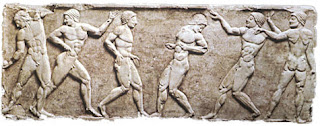
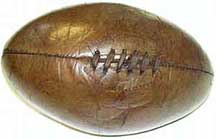 Football (as well as rugby and soccer) are believed to have descended from
the ancient Greek game of harpaston. Harpaston is mentioned frequently in
classical literature, where it is often referred to as a “very rough and brutal
game“. The rules of this ancient sport were quite simple: Points were awarded when a player would cross
a goal line by kicking the ball, running with it across the goal line, or
throwing it across the line to another player. The other team’s objective was
simply to stop them by any means possible.
There was no specific field length, no side line boundaries, no
specified number of players per team, only a glaring lack of rules.
Football (as well as rugby and soccer) are believed to have descended from
the ancient Greek game of harpaston. Harpaston is mentioned frequently in
classical literature, where it is often referred to as a “very rough and brutal
game“. The rules of this ancient sport were quite simple: Points were awarded when a player would cross
a goal line by kicking the ball, running with it across the goal line, or
throwing it across the line to another player. The other team’s objective was
simply to stop them by any means possible.
There was no specific field length, no side line boundaries, no
specified number of players per team, only a glaring lack of rules.
 Football didn’t really begin to take on any consistency of rules and
boundaries until it was picked up as a sport in the seven major public schools
of England in the early 1800’s. Six of the seven schools were largely playing
the same game (including Eton, Harrow and Winchester) - while the seventh,
Rugby School (founded in 1567) was playing a markedly different version of
football.
Football didn’t really begin to take on any consistency of rules and
boundaries until it was picked up as a sport in the seven major public schools
of England in the early 1800’s. Six of the seven schools were largely playing
the same game (including Eton, Harrow and Winchester) - while the seventh,
Rugby School (founded in 1567) was playing a markedly different version of
football.
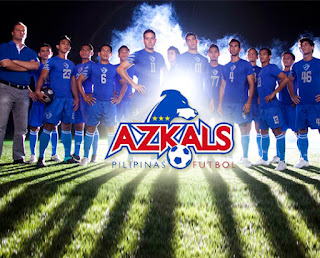 The Philippine National Football Team is the national football team of the
Philippines and represents the country in international football. The team is
controlled by the Philippine Football Federation (PFF), the governing body of
football in the Philippines.
The Philippine National Football Team is the national football team of the
Philippines and represents the country in international football. The team is
controlled by the Philippine Football Federation (PFF), the governing body of
football in the Philippines.
Football (as well as rugby and soccer) are believed to have descended from
the ancient Greek game of harpaston. Harpaston is mentioned frequently in
classical literature, where it is often referred to as a “very rough and brutal
game“. The rules of this ancient sport were quite simple: Points were awarded when a player would cross
a goal line by kicking the ball, running with it across the goal line, or
throwing it across the line to another player. The other team’s objective was
simply to stop them by any means possible.
There was no specific field length, no side line boundaries, no
specified number of players per team, only a glaring lack of rules.
Most modern versions of football are believed to have originated from
England in the twelfth century. The game became so popular in England that the
kings of that time (Henry II and Henry IV) actually banned football. They
believed that football was taking away interest from the traditional sports of
England, such as fencing and archery.
Evolution and the Beginnings of Standardization
 Football didn’t really begin to take on any consistency of rules and
boundaries until it was picked up as a sport in the seven major public schools
of England in the early 1800’s. Six of the seven schools were largely playing
the same game (including Eton, Harrow and Winchester) - while the seventh,
Rugby School (founded in 1567) was playing a markedly different version of
football.
Football didn’t really begin to take on any consistency of rules and
boundaries until it was picked up as a sport in the seven major public schools
of England in the early 1800’s. Six of the seven schools were largely playing
the same game (including Eton, Harrow and Winchester) - while the seventh,
Rugby School (founded in 1567) was playing a markedly different version of
football.
The other schools moved ahead refining their rules and eventually their
game became known as "association football" – or soccer, which was
played back then much as it is today.
Rugby School went in a different direction. How and why the game developed
differently at Rugby School appears to have been lost in history, but what is
known is that by the 1830's, running with the ball at Rugby School was in
common use and 18 foot goal posts had been added with a cross-bar at 10 feet
above the ground.
The inclusion of the cross-bar was accompanied by a rule that a goal could
only be scored by the ball passing over the bar from a place kick or drop kick.
Apparently this was done to make scoring easier from further out and also to
avoid the horde of defenders standing in and blocking the mouth of the goal.
Players who were able to "touch down" the ball behind the opponent’s
goal line were awarded a "try-at-goal" - the player would make a mark
on the goal line and then walk back onto the field of play to a point where a
place kick at the goal was possible (a conversion). There was also an
"off-your-side" rule used to keep the teams apart. Passing the ball
forward was not allowed.
By the mid-1860s British schools and universities had taken up Rugby's game
and honored the school by giving the "new football" the name of
rugby.
(Source: A Brief History of the Game, retrieved last Jan.
27, 2012 from http://www.hornetfootball.org/documents/football-history.htm#top)
Philippine National Football Team
 The Philippine National Football Team is the national football team of the
Philippines and represents the country in international football. The team is
controlled by the Philippine Football Federation (PFF), the governing body of
football in the Philippines.
The Philippine National Football Team is the national football team of the
Philippines and represents the country in international football. The team is
controlled by the Philippine Football Federation (PFF), the governing body of
football in the Philippines.
Despite being one of the oldest national teams in Asia, the Philippines has
yet to qualify for the Asian Cup or the World Cup. However, they enjoyed some
success in its early years between 1913 and 1934 in the Far Eastern
Championship Games.
History Philippine National Football Team
In September 2006 the country fell to 195th on the FIFA World Rankings, its
lowest ever. By the end of the year, the Philippines moved back up to 171st
overall, after a good run in the 2007 ASEAN Football Championship
qualification. They were able to win three games in a row which was a first for
the Philippines and thus qualifying for the 2007 ASEAN Football Championship.
Coach at that time Aris Caslib, aimed to reach the semi-finals with two wins at
the group stage. The decision came despite Philippine Football Federation
president Juan Miguel Romualdez stating that they would still be underdogs in
the tournament and that they mustn't raise their expectations too high, as the
Philippines have only won their first ever win of the tournament during the
2004 edition.
The Philippines eventually failed to reach their target, only getting a
draw in three matches. Their poor performances led to Caslib's resignation, as
well as the refusal of the PFF to register and enter the qualification stages
for the 2010 FIFA World Cup. They would be one of four nations, all from
Southeast Asia not to enter after a record number of entries. However it was
revealed that the decision not to enter the 2010 as well as the 2006 World Cup
qualification was made during the PFF presidency of Rene Adad, whose term ended
in 2003. Instead, the PFF wanted to focus on domestic and regional
competitions.
Since 2007, the Philippines have failed to qualify for a major competition.
They came close in 2008 after missing out on the 2008 AFC Challenge Cup only on
goal difference, and the 2008 AFF Suzuki Cup with an inferior goals scored
record. In 2010, they qualified for the 2010 AFF Suzuki Cup, where they stayed
undefeated in the group stage and also went on to beat defending champions
Vietnam, becoming one of the biggest upsets in the history of the tournament.
The team reached the knockout stage for the first time, eventually losing to
Indonesia in the semifinals. In 2011, the Philippines qualified for the AFC
Challenge Cup for the first time since qualifiers were introduced in the
tournament.
On July 3, 2011, the Philippines recorded their first ever victory in FIFA
World Cup qualification, beating Sri Lanka 4–0 in the second leg of the first
preliminary round. They advanced 5–1 on aggregate, drawing 1–1 in the first leg
before winning at the Rizal Memorial Stadium. (Article by Rolly B. Caidic)
(Source: Philippines national football team retrieved last
Jan. 27, 2012 from http://en.wikipedia.org/wiki/Philippines_national_football_team)
Monday, January 9, 2012




Thursday, May 26, 2011

Saturday, May 7, 2011

Wednesday, February 9, 2011
Fun with posting
Tried this 4d 1st tym using my iphone =)
Haha pictures uploading didnt worked! Anyway wuz fun posting somethin here from my phone..
Here at Psbc grounds using free wifi acess.. Waiting for my departure tym..
Wuz watching mr n ms psbc pagent..
Haha pictures uploading didnt worked! Anyway wuz fun posting somethin here from my phone..
Here at Psbc grounds using free wifi acess.. Waiting for my departure tym..
Wuz watching mr n ms psbc pagent..
Thursday, December 23, 2010
THE “X” IN “XMAS” DOESN’T TAKE THE “CHRIST” OUT OF “CHRISTMAS”
Myth: “Xmas” is a non-religious name / spelling for “Christmas”.
It turns out, “Xmas” is not a non-religious version of “Christmas”. The “X” is actually indicating the Greek letter “Chi”, which is short for the Greek , meaning “Christ”. So “Xmas” and “Christmas” are equivalent in every way except their lettering.
 , meaning “Christ”. So “Xmas” and “Christmas” are equivalent in every way except their lettering.
Although writing guides such as those issued by the New York Times; the BBC; The Christian Writer’s Manual of Style; and Oxford Press discourage the use of XMas in formal writing, at one time, it was a very popular practice, particularly with religious scribes. In fact, the practice of using the symbol “X” in place of Christ’s name has been going on amongst religious scholars for at least 1000 years.
Eventually, this practice spread to non-religious writings. Pretty much everywhere “Christ” appeared in a word, the Greek Chi would replace that part of the word. For example, in the 17th and 18th centuries, there are numerous non-religious documents containing instances of “Xine” being a common spelling for someone who’s name was Christine.
Bonus Factoids:
- The “-mas” part on the end of Christmas and Xmas comes from the Old English word for “mass”.
- Other classic common abbreviations for “Christ” were: “Xp” and “Xt”, again both an abbreviated form of the Greek for Christ.
The Greek letters “X” (Chi) and “p” (Rho) superimposed together was once a very common symbol signifying Christ and was called, somewhat unimaginatively, the Chi-Rho.
- The Chi-Rho was also used by scribes in a non-religious sense to mark some passage that was particularly good, with it literally implying “good”.
- In 1977, the Governor of New Hampshire issued a press release stating that journalists should cease taking the “Christ” out of “Christmas” as “Xmas” was a pagan spelling of Christmas. Perhaps he should have run that press release by a religious scholar before issuing it.
- Although, even those well versed and respected in Christianity often make the same mistake, such as Franklin Graham in an interview on CNN: “For us as Christians, this is one of the most holy of the holidays, the birth of our savior Jesus Christ. And for people to take Christ out of Christmas. They’re happy to say merry Xmas. Let’s just take Jesus out. And really, I think, a war against the name of Jesus Christ.”


Monday, December 20, 2010

Saturday, November 6, 2010


Fun with names
1.Real Name: Rolly Bagamano Caidic
2. YOUR GANGSTA NAME: (first 4 letters of your name + zzie)
rollzzie
3. YOUR DETECTIVE NAME: (fav color and fav animal)
green dog!
4. YOUR SOAP OPERA NAME: (middle name, and current street)
bagamano quesada
5. YOUR STAR WARS NAME: (the first 3 letters of your last name, first 2 letters of your first name, first 3 letters of mom's name)
cairolia
6. SUPERHERO NAME: (2nd favorite color, favorite drink)
red juice???
7. IRAQI NAME: (2nd letter of your first name, 3rd letter of your last name, any letter of your middle name, 2nd letter of your moms maiden name, 3rd letter of your dads middle name, 1st letter of a siblings first name, last letter of your moms middle name)
Roiblvro
8. MONUMENT NAME: (fathers or mothers middle name)
blanco
9. GOTH NAME: (3rd favorite color, and the name of one your pets)
white cutie
10. SCREEN NAME: (any of your tv's brand and your mom's middle name)
sharp bagamano
Wednesday, October 27, 2010
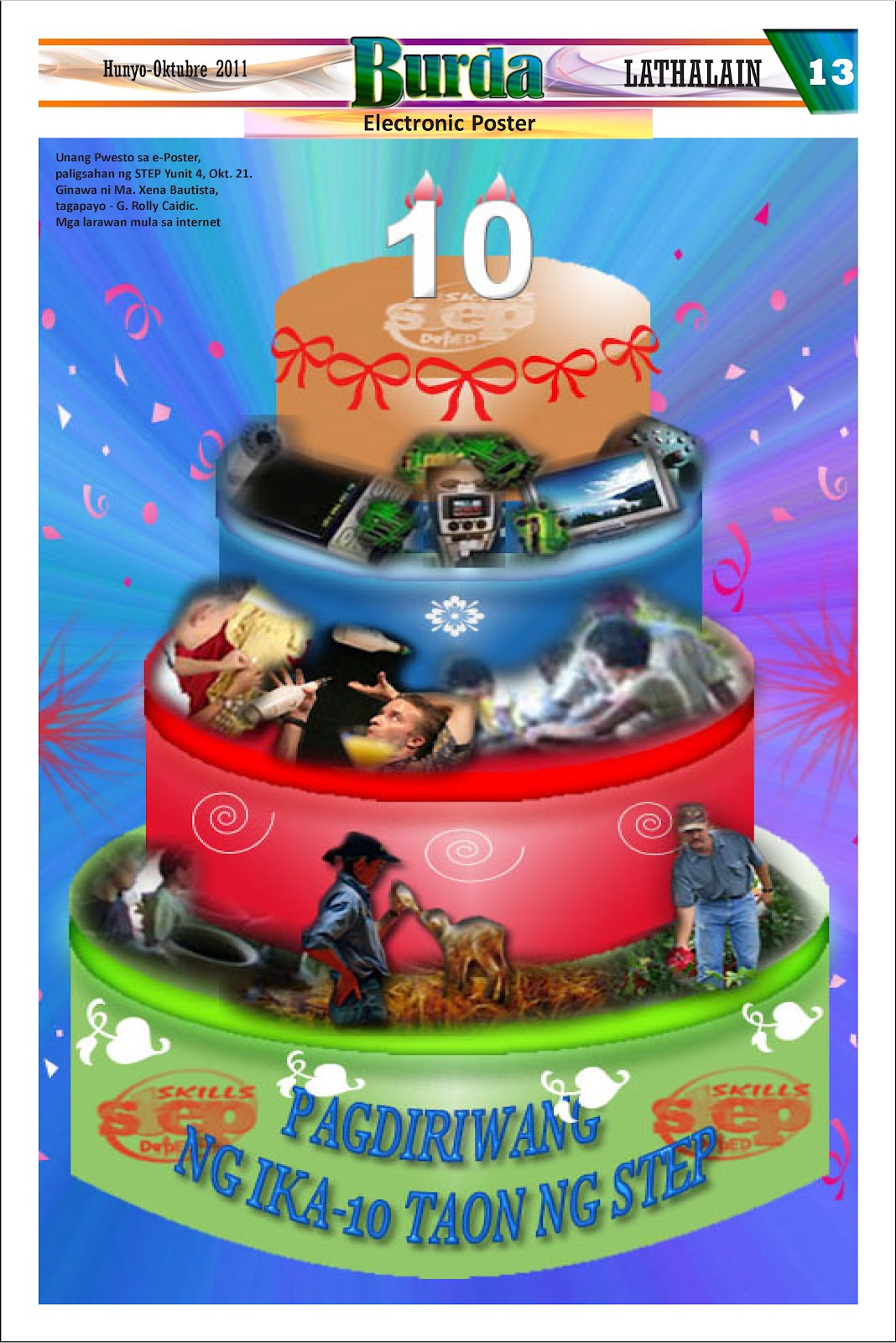
E-poster by Xena
1st place Unit Level
2nd place Division Level
Electronic Poster Making by Xena Bautista

Electronic Poster Making by Xena Bautista

STEP Skills congrats LNHS!
 |
| da hairdresser en da coach! and the boys! (at d back) |
 |
| makita na ang kamay khit di makita mukha.. hakhak |
 |
| 2nd place hairdressing (tama ba term?! ahaha!) |
 |
| 1st place bar tending and cocktail mixing |
 |
| 1st place electronic poster making |
 |
| uwian taym! |

 |
| may masamang balak yun dalawa sa likod.. |

Sunday, October 24, 2010

Saturday, August 14, 2010
Subscribe to:
Posts (Atom)